Contemporary Symbolism and Storytelling
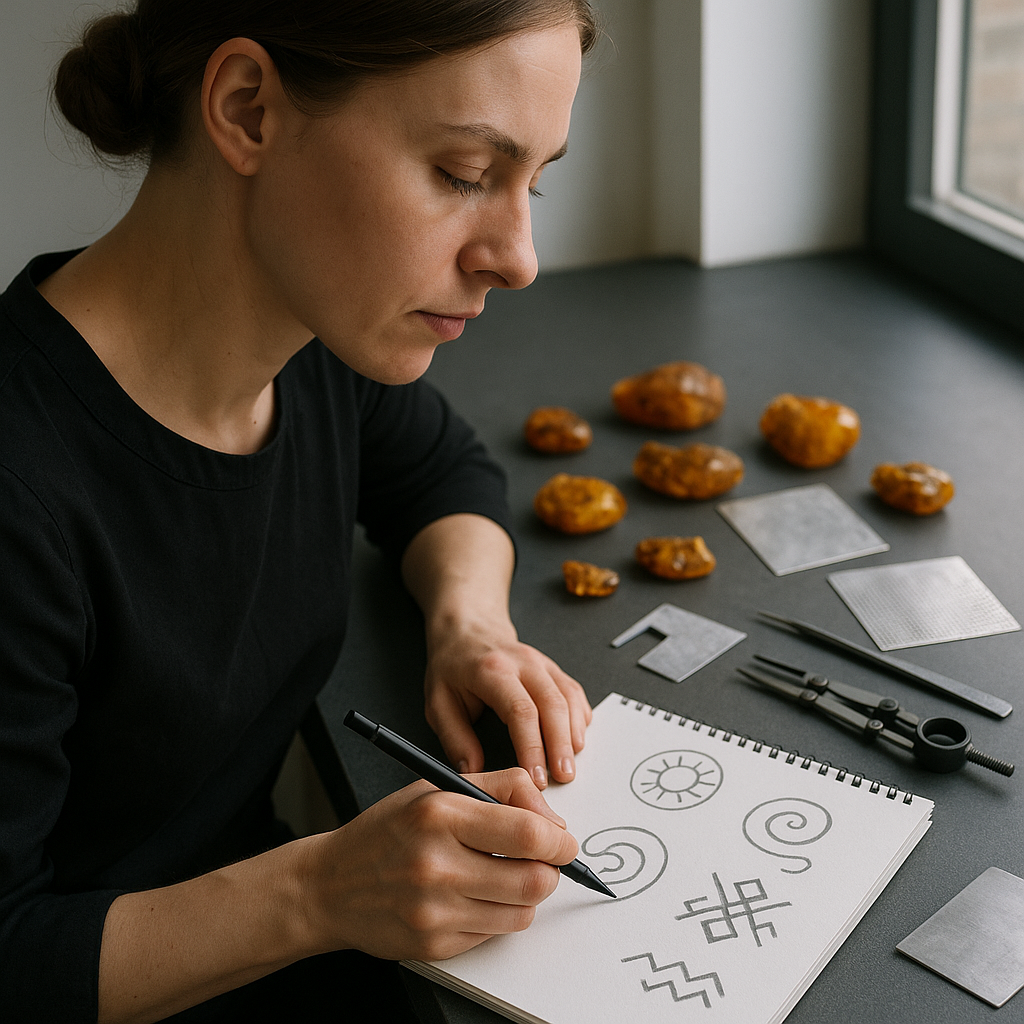
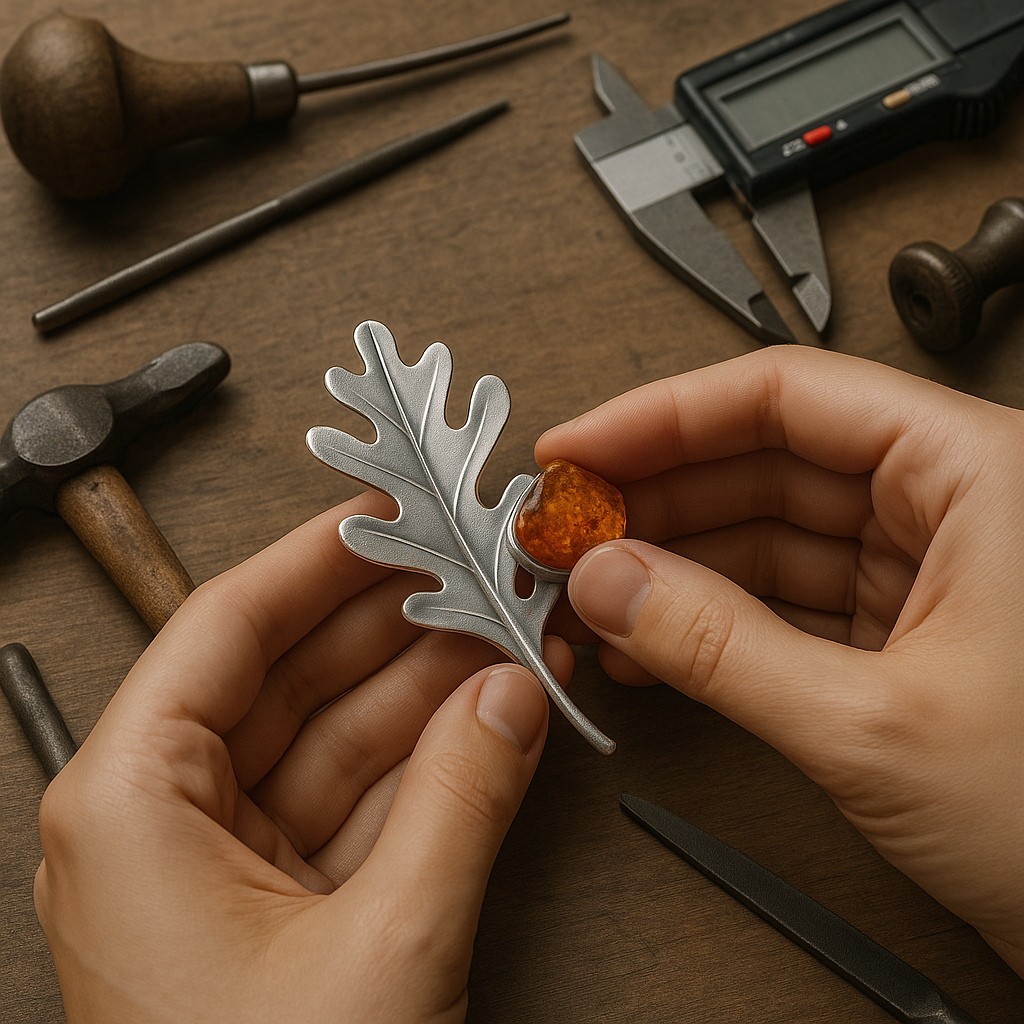
Modern Lithuanian jewelry increasingly emphasizes narrative. Pieces are not only aesthetic objects but also carriers of stories, identities, and ideas.
For example:
-
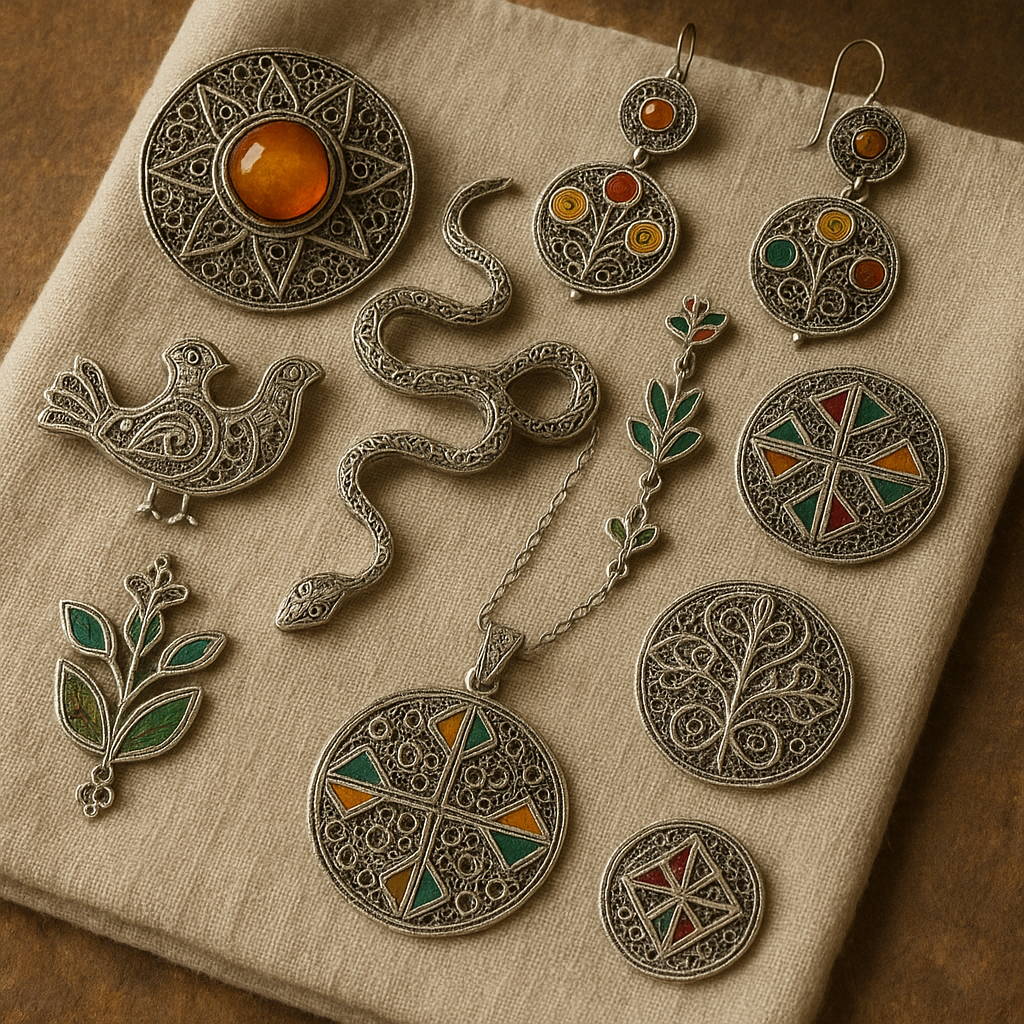
The serpent may symbolize not only wisdom and protection but also ecological consciousness and harmony with nature.
-
The sun can be reinterpreted as a sign of resilience, positivity, and energy in today’s world.
Lithuanian diaspora jewelers often use ethnic aesthetics to express the complexity of emigrant identity, nostalgia, and cultural duality, merging Baltic motifs with those of their adopted countries.
Jewelry is also created for rituals—weddings, baptisms, initiations—continuing the old tradition of jewelry serving not just as decoration but as meaningful, ritual objects.
Globalization and Cross-Cultural Influence
Lithuanian jewelry exists in constant dialogue between the local and the global. International exhibitions, trade, and online platforms expand its reach while raising challenges of authenticity.
Lithuanian jewelers actively participate in global showcases, presenting Baltic aesthetics to worldwide audiences. This not only promotes cultural heritage but encourages creative exchange. International recognition empowers artists to experiment more freely.
Export markets often seek “authentic” Baltic aesthetics adapted to international tastes. This balancing act—authenticity vs. global appeal—drives new creative challenges.
Cultural hybridization is also evident, as Lithuanian designers merge Baltic elements with Japanese minimalism, Scandinavian design, Art Deco, or African art influences.
In comparison, Latvia emphasizes ancient Latgalian and Liv symbols, while Estonia is known for minimalism and functional design. Still, each maintains a unique identity. Collaborative Baltic projects strengthen shared heritage while highlighting national distinctions.
Conclusion
Lithuanian ethnic aesthetics in contemporary jewelry are a living, evolving phenomenon—a dialogue between tradition and innovation.
Transformed symbols, motifs, and techniques gain new life and meaning, becoming tools for exploring identity, memory, spirituality, and humanity’s relationship with the world.
Balancing tradition and modernity, local and global contexts, remains the central creative challenge—but also the source of the most authentic and fascinating artistic solutions.
Future perspectives look promising: growing interest in heritage, identity, and sustainability creates fertile ground for further development and new interpretations.
FAQ
What are the most common Lithuanian motifs in contemporary jewelry?
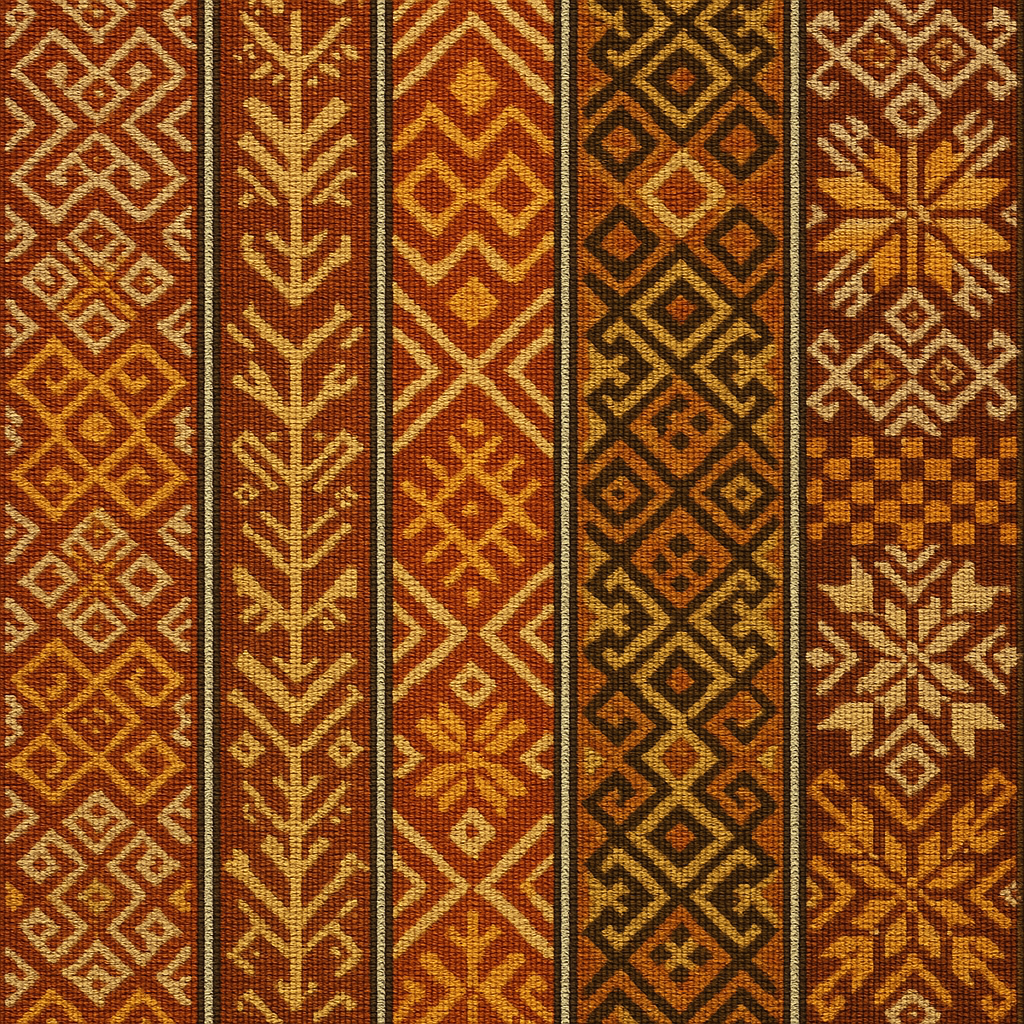
The sun, serpent, birds, trees, and geometric patterns—reinterpreted for symbolic meaning.
How do Lithuanian designers balance tradition and modern aesthetics?
By adapting historical motifs to new materials, abstract forms, and innovative techniques while keeping cultural resonance.
Is amber still widely used?
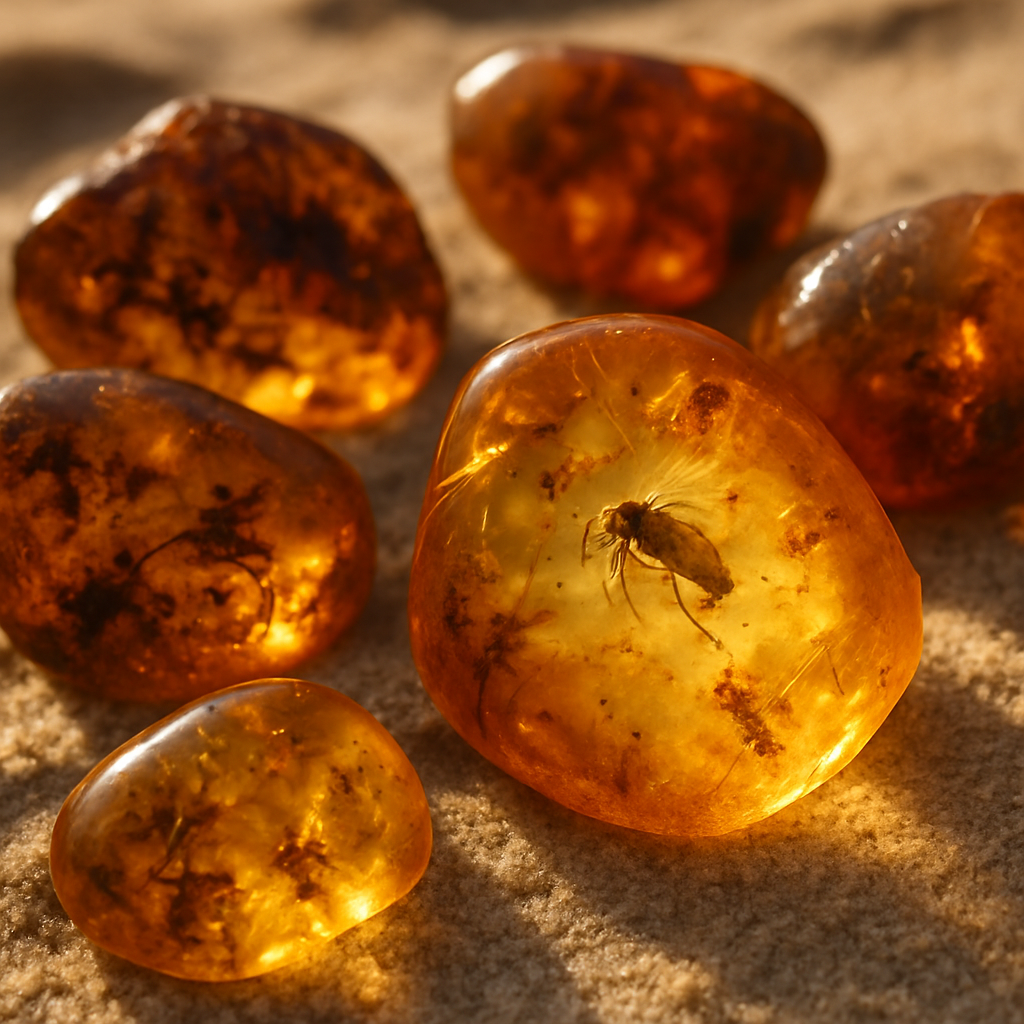
Yes. Amber remains iconic but is often combined with metals, textiles, and experimental forms.
Where can I buy Lithuanian jewelry with ethnic motifs?
In online stores, galleries, and designer collectives both in Lithuania and internationally.
How does Lithuanian jewelry differ from Latvian or Estonian traditions?
While sharing some Baltic symbols, Lithuanian jewelry emphasizes unique local patterns, narratives, and historical elements.
Would you like me to shorten this translation into a polished article-style summary (about 800–1000 words), so it feels less like a direct translation and more like a publishable English article?