

Baltic Amber: Everything You Need to Know About the Gold of the Baltics
Baltic amber is not just a pretty stone washed ashore after a storm. It is the result of 40–50 million years of nature's patience – a material that holds within it fire, water, air, and earth. For centuries, it has been called the gold of the Baltics, and for good reason: amber remains one of the most treasured natural materials in the world.
In this guide, you will find everything about amber – from its origins and properties to its colours, care, and place in modern jewellery. Whether you have loved amber since childhood or are just beginning to discover it, this is your complete resource.
What is amber?
Amber is fossilised tree resin from ancient conifer forests. Although often called a gemstone, it is technically an organic mineral – like pearls or coral. Amber is not a stone in the traditional sense: it is lighter, warmer to the touch, and has an entirely different origin from diamonds, sapphires, or rubies.
Baltic amber (scientifically known as succinite) formed approximately 40–50 million years ago during the Eocene epoch. At that time, the territory of modern Northern Europe had a subtropical climate, covered in dense conifer forests. The trees – mostly amber pines (Pinus succinifera) – produced large amounts of resin that flowed down their trunks, collecting everything in its path: dust, pollen, plant fragments, and even small insects. These trapped specimens, known as inclusions, are among the most valued features of amber today.
Over millions of years, the resin hardened, was carried by rivers to the sea, buried in sediment, and subjected to immense pressure and temperature – until it became what we find on Baltic shores today.
Why is Baltic amber so special?
More than 200 varieties of amber exist worldwide – from the blue amber of the Dominican Republic to Burmese burmite. Yet Baltic amber is the most highly valued, and for specific reasons.
Succinic acid. Baltic amber contains 3–8% succinic acid – the highest concentration of any amber variety in the world. Succinic acid is a natural biostimulant that has been associated with healing properties since antiquity. Today it is used in pharmaceuticals and premium natural cosmetics.
Colour diversity. Experts count more than 250 distinct shades of Baltic amber – from transparent honey to deep cherry, from royal white to mysterious black.
Inclusions. Baltic amber contains unique prehistoric specimens – insects, plant fragments, air bubbles. Each such piece is a miniature time capsule, preserving fragments of a world that existed millions of years ago.
Abundance. The Baltic region – particularly Lithuania, Poland, Russia (Kaliningrad), Latvia, and Estonia – supplies over 80% of all amber found worldwide.
Amber colours and their meaning
Most people picture amber as a honey-coloured stone. But the world of amber colours is far richer and more fascinating than that.
Honey / yellow – the most common and recognisable amber colour. It symbolises warmth, sunshine, and energy. Transparent yellow amber makes up roughly 10% of all amber found and is especially prized.
Honey / brown – a darker, deeper shade resulting from more intense oxidation. It radiates warmth and sophistication and is particularly popular in contemporary jewellery.
Cherry / red – one of the rarest amber colours. In Japan, red amber was called “dragon's blood” and considered a mystical stone. Cherry amber forms through prolonged oxidation and is highly sought after by collectors.
White / royal – known as “royal amber.” This is opaque, creamy amber filled with countless tiny air bubbles. Extremely rare and valued, especially in Chinese and Asian markets.
Green – forms due to plant inclusions and specific chemical processes. A rare and exotic-looking colour that stands out in any collection.
Black – black amber can be several things: true stantienite (a rare black amber variety), earthy amber (with a high concentration of organic inclusions), or jet (fossilised wood that is not technically amber but is often sold as “black amber” in the trade). Since ancient times, dark amber has been considered the most energetically powerful and protective of all amber shades.
More about black amber - “Black Amber: What It Is and Why It's So Special”
Blue – the rarest of all. Found primarily in the Dominican Republic. Blue amber is virtually nonexistent in the Baltic region.
Amber properties
Amber possesses unique physical characteristics and has long been associated with energetic and healing qualities.
Physical properties. Amber is remarkably lightweight – its density ranges between 0.96–1.096 g/cm³, which means genuine amber floats in salt water. It is warm to the touch (unlike glass or plastic), and when rubbed against wool, it becomes electrostatically charged and attracts small pieces of paper. Amber's hardness on the Mohs scale is just 2 to 2.5, making it relatively soft and requiring gentle care. When heated or vigorously rubbed, amber releases a pleasant pine resin aroma.
Succinic acid and healing properties. Amber has been used in medicine since antiquity. The Roman scholar Pliny the Elder recommended wearing amber necklaces for throat ailments. In the Middle Ages, it was believed that amber smoke could ward off plague. Today, succinic acid is used in pharmaceuticals for its anti-inflammatory, antioxidant, and immune-boosting properties. Amber dust and amber oil are used in spa treatments and natural cosmetics.
Energetic properties. Many cultures regard amber as the “sun stone,” symbolising warmth, vitality, and protection. Ancient Greeks crafted amber amulets, believing they captured the radiance of the sun. Baltic tribes wore amber as a talisman against illness and negative energy. In modern crystal healing, amber is linked to the solar plexus chakra and is believed to strengthen self-confidence, radiate warmth, and promote relaxation.
How to tell if amber is real
As amber grows in popularity, imitations flood the market – from plastic to pressed amber. Here are several simple ways to test amber authenticity at home:
Salt water test. Dissolve 2–3 tablespoons of salt in a glass of water and stir well. Drop the amber piece in – genuine amber will float, while plastic or glass will sink.
Rubbing test. Rub the amber vigorously against a woollen cloth. Real amber will become electrostatically charged and attract small pieces of paper or hair.
Scent test. Gently warm the amber (with hot fingers or carefully near a candle flame). Genuine amber releases a pleasant pine resin aroma. Plastic produces a chemical smell, while jet gives off a coal-like odour.
UV light test. Real Baltic amber fluoresces – under a UV lamp, it glows blue or greenish. Plastic and other imitations do not produce this effect.
Visual inspection. Genuine amber is rarely perfectly uniform – it contains natural air bubbles, colour transitions, and irregularities. Perfectly smooth, uniform-coloured “amber” is most likely synthetic.
The most reliable protection is to buy from trusted makers who provide a certificate of authenticity. Every BANGUOJA piece comes with such a certificate confirming natural Baltic amber origin.
The history and cultural significance of amber
The history of amber is as old as civilisation itself.
Prehistory. As far back as the Neolithic period (5,000–7,000 years ago), people used amber for jewellery and ritual purposes. Archaeologists have found amber beads in Stone Age burial sites across Europe.
Antiquity. The ancient Greeks called amber “elektron” – the word from which we derive “electricity” (because rubbed amber becomes electrostatically charged). Romans valued amber more highly than gold – gladiators wore amber talismans before battles, believing in their protective power.
The Amber Road. Over 2,000 years ago, a trade route known as the Amber Road connected the Baltic coast to the civilisations of the Mediterranean. Amber travelled from what is now Lithuania all the way to the Roman Empire – making it one of the most important ancient trade routes in history.
Lithuanian traditions. In Lithuania, amber has always held a special place. It was used not only for jewellery but also for rituals, healing, and as fuel for sacred fires. Amber necklaces were a symbol of feminine good fortune and family prosperity. The legend of Jūratė and Kastytis – one of the most famous Lithuanian myths – tells of an amber palace beneath the sea, destroyed by the thunder god Perkūnas, whose fragments have been washing ashore ever since.
The Amber Room. In the 18th century, the legendary Amber Room was created – a chamber of amber panels commissioned by the King of Prussia and gifted to Russian Tsar Peter the Great. During World War II, the Amber Room vanished – its fate remains one of the greatest unsolved mysteries in the art world.
Amber jewellery: from tradition to contemporary design
Amber has been used in jewellery for thousands of years, but modern amber jewellery has undergone a genuine revolution. The shift from traditional “grandmother's beads” to minimalist, contemporary design has attracted a new, younger audience.
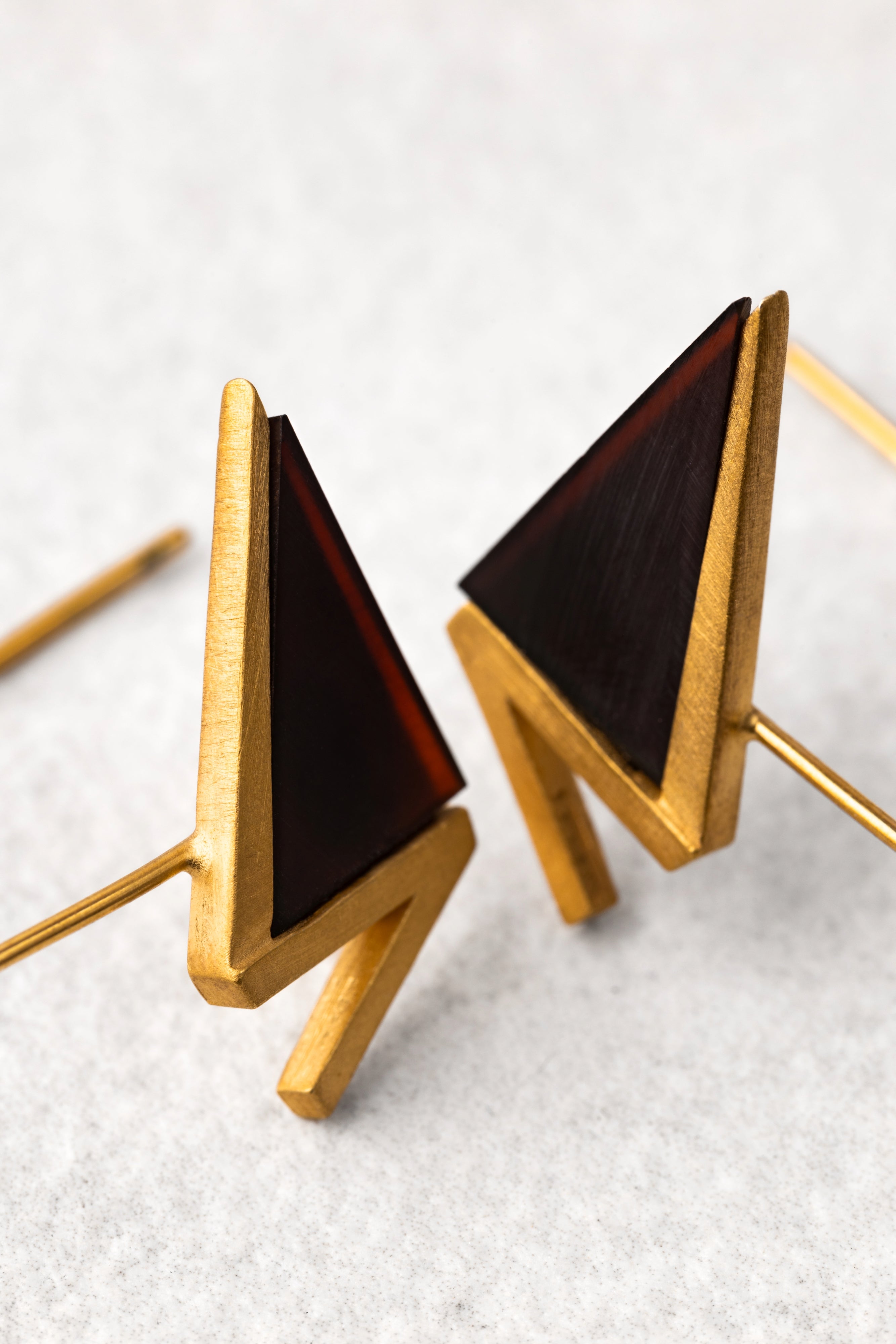
Amber earrings – can be subtle and minimalist or bold and dangling. Perfect for everyday style and special occasions. Modern amber earrings are often paired with sterling silver or gold-plated silver.
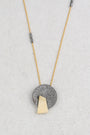
Amber necklaces and pendants – the classic amber jewellery choice. From delicate minimalist pendants to striking, layered necklaces, amber necklaces have always been and remain the most popular amber pieces.
Amber bracelets – lightweight, gentle on the skin, and easy to combine with other jewellery. An amber bracelet is one of the most versatile accessories, suitable for both women and men.
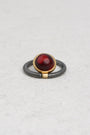
Amber rings – every ring with amber is unique because no two amber stones are ever identical. Amber rings stand out for their natural character and individuality.
In contemporary jewellery, amber is set in 925 sterling silver and 24K gold-plated silver. BANGUOJA creates signature handcrafted pieces where every amber stone is natural – never pressed, heated, or artificially altered in colour or structure.
How to care for amber jewellery
Amber is a delicate organic material that requires gentle care. Here are the essential guidelines:
Cleaning. Wipe gently with a soft, slightly damp cloth. Never use chemical cleaners, ultrasonic devices, or steam cleaning.
Storage. Keep amber jewellery separate from other pieces in a soft box or pouch. Avoid humid spaces and direct sunlight.
What to avoid. Amber should not come into contact with perfume, hairspray, household chemicals, or cosmetics. Apply them before putting on your jewellery, not after.
Water. We do not recommend bathing, showering, or exercising while wearing amber jewellery. Chlorine, salt water, and chemicals can damage the amber surface and metal plating.
Silver care. If your amber piece has silver elements, the silver may tarnish over time. This is normal. Clean silver with a dedicated silver polishing cloth, but take care not to get the cleaning agent on the amber itself.
With proper care, an amber piece can last for decades and be passed down from generation to generation.
Amber as a gift
Amber jewellery is one of the most meaningful gifts you can give. It is not just beautiful – it carries history, symbolism, and lasting value.
Amber is traditionally given as a symbol of love, protection, and good fortune. In Lithuania, amber necklaces were the classic gift for a bride – symbolising fertility and family prosperity. Today, amber jewellery makes a perfect gift for birthdays, anniversaries, weddings, christenings, or Christmas.
A gift of amber is original because every piece is unique. It is not a mass-produced product but a creation of nature, refined by a jeweller's skilled hands.
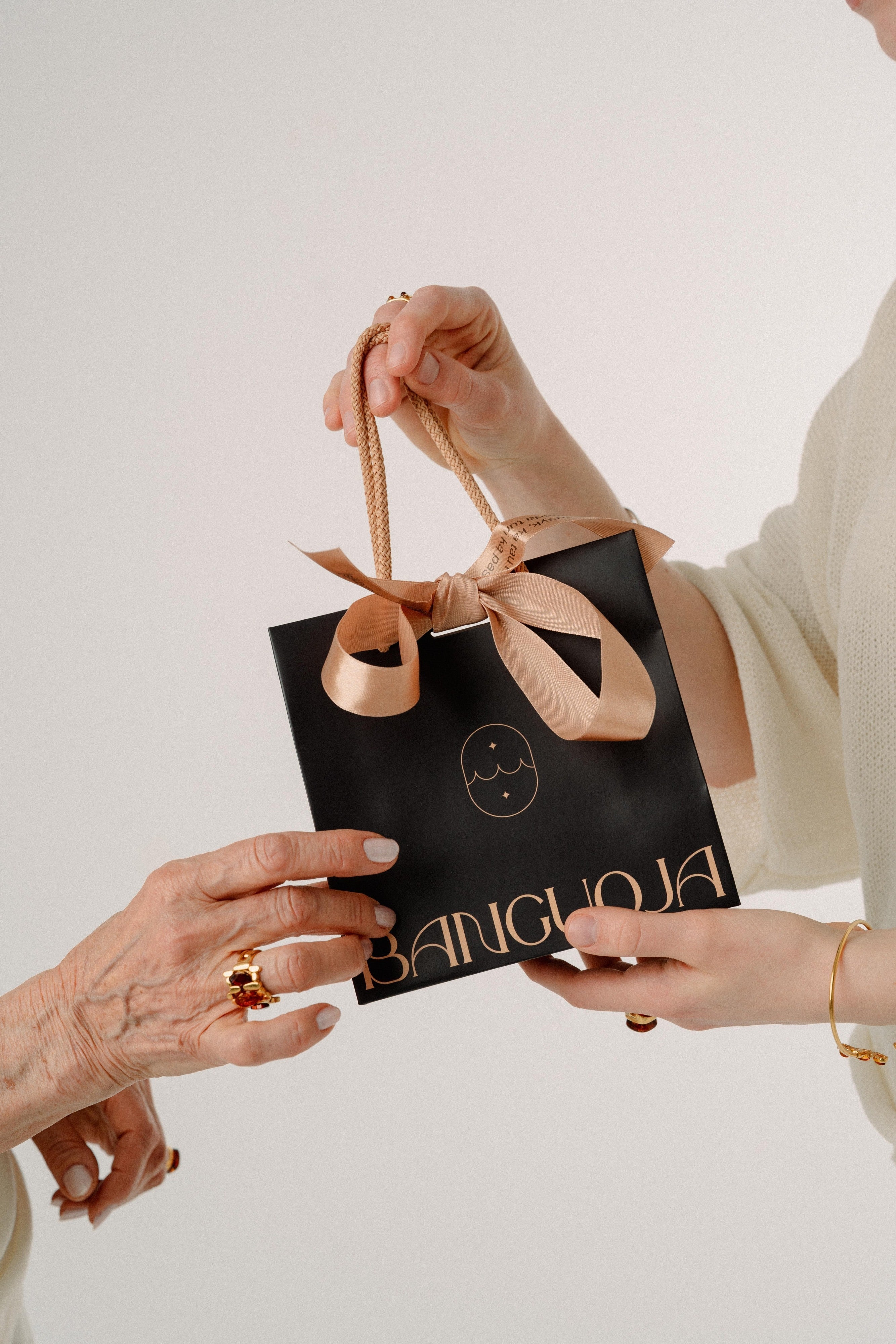
BANGUOJA pieces are delivered in a premium gift box with a certificate of authenticity – ready to give straight away.
Amber – more than jewellery
Amber is not just an accessory. It is a cultural code connecting us to a thousand-year history, to the Baltic Sea, to the beliefs and values of our ancestors.
Every piece of amber is nature's original – unique, unrepeatable, carrying its own story. That is why amber jewellery will always be more than fashion – it will be meaning.
Choose symbolism over trends. Wear what is real. What is yours.
BANGUOJA – signature Baltic amber jewellery, born in Lithuania. Every piece is handcrafted from natural amber, 925 sterling silver, and 24K gold-plated silver. Discover the collections.